Pages

Monday, 6 September 2021

Tui Lockdown MasterChef

 Friday 3rd September 2021

WALT use math measurements in baking

Yay! It's Friday, and we've made it to the end of the second week in lockdown. To celebrate, Tui whanau have been set a baking challenge: 

Bake something cakey and delicious, and decorate it in the most interesting way you can with the ingredients you have in your pantry. You have the weekend and we'll share these on Monday.

A few of the boys challenged each other to a cake-off. Meanwhile our Tui girls got to work and created some amazing cakes and cupcakes:

Sofia's Splendid Surprise Cake

Summer's Scrumptious Blue Cake 

Maya's Amazing Red Velvet Cupcakes

Regan's Chocolate Racehorse

The girls certainly won this challenge! Congratulations on some fantastic cakes! I wonder what the next challenge is? 


Friday, 11 June 2021

Voyages and Navigation: Week 5/6 Term

 Friday 11th June 2021

We are learning to synthesise information in order to compare and contrast ideas across texts. 

Over the last couple of weeks we went deeper into the texts from week 4. We discussed how the author had used language to convey the points of view differently.  For example, in the text 'Te Taki", which is told from the point of view of a Māori boy seeing Europeans for the first time the language is written as if they have never seen Europeans before. Compared to the language in the Close Call at Tristan Du Cunha which is very British formal. We found it interesting to think about how different people may have experienced these events and they way the authors choose to portray this through language.

This week we finished recording and synthesising all the texts for the purpose, audience, and point of view
and took two of the texts and compares them against each other. 


We have been continuing to create our own timelines and narrating our own stories, and some people have started creating a stop-motion animation of their ancestors experiences. Here are their works so far.

Summer created a slide show of the story of Hone Heke - who she discovered was her eighth great grandfather! You might like to have a look. 


Friday, 28 May 2021

Voyage and Discovery: Learn Week 4 Term 2

Friday 28th

We are learning to identify the authors purpose, audience and the point-of-view portrayed by of the text. 

This week we have been reading more texts from Mrs Broadwith Google site on this topic, learning about European's arrival in New Zealand. Two of our texts are non-fiction and provide information on how Captain Cook voyaged around New Zealand, charting the coastline and making contact with Māori. The other is about the same event, but tells us more about the important work Tupaia - Captain Cook's navigator played in the discovery, particularly recording events through pictures and being the  translator with Māori on their arrival.

We also read two fictional narratives. One was called 'Te Taki" and was told from the point of view of a Māori boy seeing Europeans for the first time (and preparing to challenge them), and the second a complementary account of a Scottish boy called John McLay who travelled on the ship Mooltan in 1862 from Scotland to Otago. We found it interesting to think about how different people may have experienced these events.

After reading the texts were were asked to record our understanding of who we thought  the texts were aimed at, what the purpose was, and whose point of view was being represented. 
We completed a synthesis chart to record information. This is Chaucer Groups digital copy:

We have started creating our own timelines and narrating our own stories of our ancestors journeys to New Zealand. Some people like to use paper. Some people prefer to go digital and use google slides. These are examples of Summer's and James's paper timeline, and Paora's digital timeline.


We are really enjoying finding out about who we are and where we come from! Even Mrs B has been researching her family tree.


Friday, 21 May 2021

Voyage and Navigation Inquiry: Learn Week 3 Term 2

Following on from our amazing visit to Waitangi last week, Tui Whanau have been reading more about how people voyaged to New Zealand from different parts of the world.  

Mrs Broadwith create a Google site on this topic for us to access so we can access information about this topic easily.

We read about how many people - both men and women - travelled in large double- hulled waka from places like Polynesia and Micronesia, across oceans to come thousands of kilometres to get here. One of our texts told us about the type of wood these waka were carved from. Another talked about the way the explorers used the ocean currents to navigate their way towards the land. Did you know that the ocean currents change the closer to land they get? They also use the stars in the night sky to navigate their way and stay on course. 

We were learning to identify keywords on the topic and summarise these texts. 

Here is Liam's reading response. Mrs B said this is a good example of a response because he has summarised the text using the keywords and put in enough detail to explain it well, but not so much to make it too long. 


We created word art and word puzzles using the keywords. This is an example of Brooke's Word Art and Jordy's Criss-Cross Puzzle

We learnt you have to save puzzle maker puzzles carefully or they disappear on you!

Wednesday, 17 March 2021

KiwiCan 17.3.21

We were learning how to co-operate in a team.


Today in Kiwican we started off with a game called "Bear, Salmon, Mosquito." Its a bit like Rock, Paper, Scissors. The aim of this game is to decide a team which action to choose to battle the other team. Bear beats Salmon, Salmon beats Mosquito, Mosquito beats Bear.  In this game you have to work together and agree which action you are all doing. Everyone has to do the same action. If there is confusion your team loses. 

We enjoyed this game because its exciting, and you get to do funny faces, good expressions, and make loud noises at our classmates. 

Today we didn't do so well because we kept talking during the game, so the game had to stop. 

Bear
Salmon

Mozzie


Thursday, 11 March 2021

Maths Groups

 WALT read and order whole numbers up to 1,000,000

This week in Tui Whanau, some of us have been learning how to read larger numbers involving 7 digits or more. Including tenths and hundredths.

We discussed the difference between 'digits' and 'numbers' and learnt that reading and ordering numbers requires understanding that where a digit is placed within a number changes its values.  If a digit is in a higher place its value goes up. For example:

3,567,896 - Here the 9 is worth 90

3,967,856 - Here the 9 is worth 900,000

To practice this understanding we played a game using cards. Each member of the group gets dealt 6 cards between A (1) - 9, with a Q as a 0. Each player looks at their cards and decides where they are going to place their cards face down to make the biggest 6 digit number.

Photo


They then place their cards face down in front of them, with the lowest digit on the right and the largest digit on the left. Each person reveals each places value.


Photo


The group has to order the numbers from the highest to the lowest number. 


Photo


Each person then receives the number they made in maths money.  So the biggest number is worth the most. 


Our group enjoyed playing the game and seeing how the value changes.

By Ataahua, Bailee, Maya, Starley, Summer, Sofia.


Wednesday, 20 May 2020

Bok Choy Summary

W.A.L.T upload our learning tasks and write about them.

Today was our last day reading Bok Choy. Our writing tasks for the last two days have been to create a storyboard and a summary. Below is a picture of my storyboard and summary.


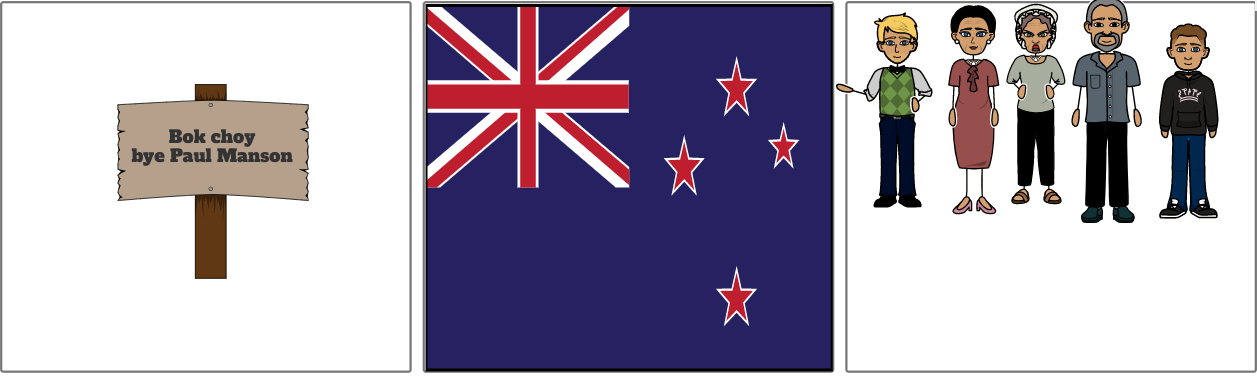
Bok choy is a story written by Paul Mason
The story is set in a chinese village in New Zealand.
There’s a few main characters in the story, Ah sum, mother, Mrs Bishop, William and Jacob. At the beginning of the story Jacob and his mother are stacking firewood and they get interrupted by an old man named Ah sum, who came over to sell some Bok choy to get money.Then Jacob decides to go fishing, as he was fishing he go swept of the rocks and couldn’t get out, all he remembers was waking up in Ah sum’s chinese hut.It’s weird for Jacob because he has never been in the chinese village before, then Jacob realises that Au sum’s very kind and helpful. Soon later Jacob's mother comes to collect him and his mother was very grateful for what Ah sum did and wanted to thank him for his good deed.
As Jacob and his mother are walking home they are stopped by Mrs Bishop, Jacob and mother aren’t happy with this so they stick up for Ah sum by correcting her racist word that she calls chinese cabbage which it is actually Bok choy.
How do you think I did creating my storyboard and summary?

Did I enjoy reading Bok Choy? I did enjoy reading Bok Choy because it had a really good message in it. A old man, a nice old man, Ah Sum was not liked or treated nicely at the beginning. Towards the middle of the story he saves a boy from drowning and people begin to treat him nicer. I like how doing good deeds makes people realise you are a good person?

What was my favourite part? My favourite part is when Jacob's mother sticks up for Ah Sum in front of Mrs Bishop. This is my favourite part because instead of putting down Ah Sum, she protects him as he has protected her son.

I believe the author has written a fantastic story. They've taught their audience an important message which is great.

Monday, 18 May 2020

Ah Sum's Hut

WALT upload our reading tasks and write about them.

Today was my first proper day back at school. Being at school has been different from when we left last term. We have been continuing our online learning that we have been doing at home, but we have been doing it at school instead. Today for reading we read a book called 'Bok Choy' and our follow up task was to create a google drawing, a pencil drawing or our own chosen way to create Ah Sum's hut.

I choose to create a google drawing of Ah Sum's hut. To create his hut I used the shape tools and images off Google to create my hut. In my hut I have stone walls, a fire and a chimney. I've also included a clothes rack with is draped with their wet clothes. Their clothes were wet because they got swept off the rocks. I also have chairs, a table and food that they were eating on the table. Ah Sum and Jacob are inside the hut talking.

I enjoyed making this creation and thinking of different ways to make different objects. To improve my creation, next time I will label the items in my creation so that people know what they are. Below is a picture of Ah Sum's hut.


Have you read Ah Sum's hut before? If not, can you guess what it is about from my google drawing?

Thursday, 23 April 2020

Diary entry

WALT create quality blog posts that explain our learning


Today we had to write a diary entry from the perspective of the main character in the story. Here is my letter, take a read, let me know what you think.
I really enjoyed this task as I enjoy creative writing and I like putting myself in someone elses shoes to try and understand how they would be feeling.

This week our reading text has been a graphic novel. A graphic novel looks very similar to a comic. I enjoy reading graphic novels because they have very cool images/pictures and they use minimal words, but still manage to tell a great story. Have you read a graphic novel before?

LEGO creation

WALT create quality blog posts that explain our learning.


I have been reading a text called Harry's War and my reading task for today was to create a scene from the text out of LEGO or materials I could find around the house. I LOVE LEGO so I created a LEGO scene. 

The scene I choose to create was Harry practising at his training camp. In my scene you can see men with guns, army tanks, cabins, medical centres and grass. I choose this scene as Harry really didn't want to go to war or to practise war, but he had no choice.

Do you build LEGO creations? What have you built before?

ANZAC Day Poster

WALT create quality blog posts that explain our learning


Today our reading task was to watch a video about ANZAC day and then create a poster online about what we learnt. In my poster I have written about what ANZAC day is, when and why it is celebrated and the background behind it. Take a look, tell me what you learn!

I already knew quite a bit about ANZAC day as my poppa fought in the world war 2, so I've always shown in interest in wars. But some new things I learnt was: it was made a public holiday in 1916, pretty much straight after the war. I also learnt that the ANZACs really struggled in war and found it very hard to fight back.

I would have loved to have been born a little bit earlier and to be able to talk to one of the ANZACs. I bet they have very interesting stories to tell and I'd love to thank them for protecting our country. Would you to?

ANZAC Ted

WALT create quality blog posts that explain our learning


Today our reading task was to create our very own ANZAC Ted on a google drawing - a very fun and engaging task! We are focusing our literacy tasks on ANZAC day this week as Monday 27 April was ANZAC Day Observed this year.

I created my special ted using the shapes tool, finding png images online and by colouring it in. Now I want to share a story about my ted.

ANZAC Ted had been lonely for many weeks. He'd sat in the same warehouse, he'd sat on the same shelf, next to the same teddies for what felt like years to him. Until suddenly, a little blonde girl with hazel eyes came running down the isle. "Mum, mum, this is him, the one I've been looking at online. I want him, can I have him, pleeeeease?". She instantly calmed me this girl. She looked so kind and caring. I felt like shouting "YES, she can have me!!!", but for some reason my mouth had been sewn shut. Happiness filled my body as her mum said "sure sweetie". I'd never ever felt like this before? Is this what it felt like to be loved, wanted, cared for?

Within seconds I was snatched up by this girls grasp and was taken straight to the checkout. On the drive home she patted my head, straightened my hat and run her fingers over my plasters... by the way, those plasters tell a story, but that's a story for another day!

I hope you've enjoyed my story and like my very special ANZAC Ted. Have you read ANZAC Ted before? What do you know about ANZAC Day?

Tuesday, 14 April 2020

Art drawing of a brown bear!

WALT create a quality blog post that explains our learning.


For reading today we had to draw a picture of the animal we researched about on Tuesday in their habitat. I have done a drawing of a brown bear in a forest. In the brown bears habitat I have drawn a river, trees and included animals such as deer and beavers. This is because brown bears do not live alone, they share their habitat with others.

A brown bear is a large animal, probably three to four times larger than your average human. They two beady eyes, two round ears that sit above their fluffy face and a long snout. Brown bears bodies are covered in thick, brown, fluffy fur. This keeps them warm and snug all year round! You have to be careful if you see a brown bear out, although that's unlikely in New Zealand, because their paws are attached to deathly claws. They're sharp, curved and dangerous! Brown bears walk on all four of their legs, however, did you know that they can stand on their two hing legs? Sometimes making them almost 5 feet tall!! Crazy!

What animal did you choose to research about? What does your animal look like? I'd love to know all about it!

Sunday, 12 April 2020

Research Poster - Brown Bear Animal Migration

WALT create a quality blog post that explains our learning


For reading today we had to research and create a poster about an animal and their migration patterns.

During my research I learnt that brown bears do not actually migrate to the same area at the same time of the year. Instead they migrate to areas that are nearby where there is an abundance of food. Did you know that brown bears have to eat lots of food because they hibernate over the winter months? I also learnt that brown bears can give birth to up to 4 cubs, but that pairs (or twins in human terms) are most likely.

I found it interesting that bears do not migrate to the same areas at the same time of the year. Animals such as whales, do. Once I had learnt this I found it quite believable as I know bears are solitary animals (they like to live alone), so why would they want to migrate to the same place like other animals?

When I have more time, I'd like to learn more about how and why brown bears hibernate over the winter months!

What animals do you know about that migrate? Can you tell me about their migration patterns?

Rising seas comprehension questions

WALT create a quality blog post that explains our learning.

Comprehension Questions

What percentage of water on Earth is made up of oceans?
____% of water on Earth is made up of oceans.


Why are sea levels rising?

Are rising sea levels getting better or worse? How do you know that?

What are the effects of rising sea levels?

In what year did the Port of Auckland see it’s highest sea level? What was the sea level at?

How did rainfall effect Australia?

Without researching, how do you think we could help prevent sea levels from rising?


Today for reading we had to answer some comprehension questions about a text. Above is a picture of my comprehension questions and my answers (please note: Miss Thompson has not put the answers up for obvious reasons).


Answering comprehension questions are an excellent way of seeing how much of the text you have understood. When I answer comprehension questions about a text I often re-read certain parts of the text to find the answer. Miss Thompson always tell us "It is not a memory test", so it is important to go back and find the answers if you can not remember. Re-reading and finding the answers makes me understand the text better as I have a purpose for reading and it makes me think critically about the question that is being asked.


Do you have to answer comprehension questions about a text? If so, how does it help you understand what you've read?

Summarising a text

WALT create a quality blog post that explains our learning


Our reading task for today was to write a summary about the text we read. We could either create a story board, which is what I have done, or write a short paragraph.

This is my story board summarising the main ideas from Spirit Animals.

The most interesting part of the story so far for me personally was when all of the characters on the boat assumed the animals were friendly. They did not worry about the Seagull or Sharks and the other animals that arrived. I would personally be terrified if a shark was swimming toward me, and I also don't like it when birds fly toward me either!

I've really enjoyed reading Spirit animals and cannot think of what the author could improve on so far. I wonder if they have an audio version that you could listen to? This could be handy for when you just feel like relaxing and listening to something. That could be something the author could consider?

Have you read Spirit animals? What are you reading at the moment and what is it about? I'd love to hear all about it.

Vocabulary Task

WALT create a quality blog post that explains our learning.


My reading task for today was to choose 6 unfamiliar or interesting words found in my text 'Rising Seas'. I've created a poster that has the definition of 6 words and then them written in a setence.

Completing this reading task helped me understand the text better because if I did not know what these words meant, I could not understand what the sentence or paragraph was telling me. I believe it is very important to know what words mean, and if you do not know, take the time to figure it out. Some ways I figure out words I don't know is by reading on and seeing if the text will tell me, looking at the pictures in the text, using a dictionary or googling it. Sometimes I may ask my teacher, friend or family.

What do you think of my task? Did you know what these words meant? Can you put these words in your own sentence?

Country Research - Australia

WALT: create a quality blog post that explains our learning.


My reading task for today was to read 'Rising Seas' and to research and make a poster about Australia and their weather patterns.

During my research I learnt that weather in different parts of Australia are very different to one another. They often experience very different weather patterns in each state. I assume this is because Australia is such a large country.

What did I like about Australia? I really liked how Australia is a very warm country. Apparently their lowest temperature is around 10.6 degrees celsius. Crazy, considering New Zealand can often go below 0 degrees celsius in winter time. I've thought about asking my family if we can go to Australia when it gets too cold in New Zealand. I hate being cold.

To be honest, I did not find anything I dislike about Australia. It is a country I haven't been to yet, but would love to go there in the future. Have you been to Australia? Where have you traveled to? I would love to hear all about it!

Tuesday, 17 March 2020

Researching about a country

This is an example blog post to model to students of Tui Whanau what is expected


Bali - Indonesia 

I  choose to research about Bali because I travelled there in 2015 and had an absolute blast. I really enjoyed the culture, the people and the places to visit. I was there for 15 days and did not want to come back. In my time there, I learnt how sad it can be to live in a third world country. Many people, including the eldery and kids, lived on the streets. This was upsetting. I cannot wait to go back. 

All about Bali


Image result for ubud monkey forest
Ubud Monkey Forest 
Population: 4.22 million as of 2012
Capital: Denpasar
Famous landmarks:
Uluwatu Temple - this is a Ancient Hindu Temple surrounded by the ocean
Ubud Monkey Sanctuary - Temple complex with many monkeys
Semiyak - Beaches & lots of shopping!
Mount Butar - An active volcano popular for climbing  
Currency: Rupiah ($1 NZD is roughly 9062 rupiah).

Image result for bali country flag
This is Bali's flag. Half of it is red and half of it is white.


Image result for uluwatu temple
Uluwatu Temple 

Monday, 9 March 2020

New Math Strategy

This is an example blog post for Tui Whanau.


W.A.L.T use place value partitioning to solve addition and subtraction problems.

For the last week my math group, the triangles, have been working on a math strategy called place value partitioning. When using this strategy you have to split each number into their hundreds, tens and ones, and add them together separately.

I enjoy using this strategy as I find it helps me solve problems a lot quicker and I understand the reasoning behind it. Here is an image of how to use place value partitioning.


Have you used place value partitioning before?

Challenge yourself! Have a go at using this strategy for the following problems.

1. Amy had $134 and she was given another $87 for her birthday. How much money does Amy have now?

2. James had 132 sheep in a paddock on Monday. On Tuesday, 45 had gone missing. How many sheep did he have left?


Let me know how you go!